
Atchison County Court Records After Arrest
Court records after a jail arrest begin when the custody event moves into the criminal court system. In Atchison County, the Sheriff's roster is a booking and custody tool. It may list a booking number, arresting agency, booking date, charge text, and bond. It is not the filed criminal case. The formal court record comes from the complaint, information, indictment, docket entries, orders, and disposition in the district court case.
The local prosecutor is the Atchison County Attorney. The county page names Sherri Becker as County Attorney, with email sbecker@atcoks.org and phone 913-804-6020. That office reviews law-enforcement reports and files or prosecutes criminal charges in county matters. A booking charge can be a useful lead, but the prosecutor's filed charge controls the court case.
Use jail inmate records for the custody side of the same event. Use jail roster mugshots only for booking-photo questions. Court records after a jail arrest should be checked through Kansas court records sources and the Atchison District Court when a certified copy, older file, or official charge history is needed.
The County Attorney page is the local source for prosecutor contact context.
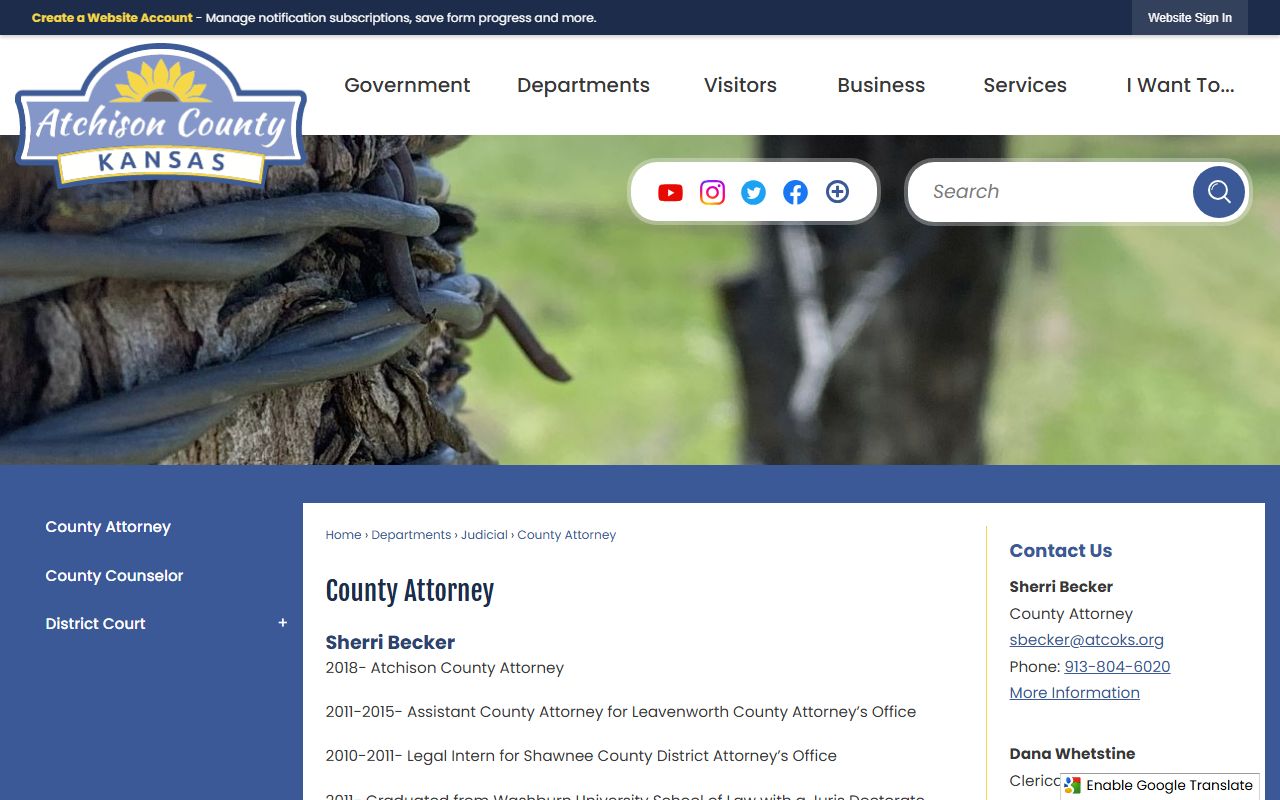
This source helps identify the office tied to filed charges, while the court record itself is searched through the judicial system.
Search Court Records After Arrest
The main statewide starting point is Kansas Case Search. The portal covers Kansas district court records and requires acceptance of a user agreement before searching. Search options documented for the portal include case number, party or person name, business name, citation, and criteria available to the user's role. Public smart search guidance says a record or case number, or a name, is needed.
The strongest Atchison County search starts with jail booking facts, then moves to the case index. Copy the defendant's full name as shown on the roster, note the booking number, note the arresting agency, and write down the booking date. If the roster or jail staff provides a court case number, search that first. If not, search by name and compare the case filing date, charge language, and court location.
- Open Kansas Case Search and accept the user agreement.
- Search by case number when known, or by the defendant's legal name when no number is available.
- Review the criminal case entries for charges, court dates, bond orders, warrants, and disposition.
- Compare the filed charge to the jail booking charge because charges may be amended, reduced, dismissed, or refiled.
- Contact Atchison District Court for official copies, older records, or access that is not clear online.
The Case Search portal is the correct search lane for court records after an arrest. It is not a complete criminal-history report. For a statewide criminal history search, Kansas points users to the KBI criminal history record search, which requires a KanAccess account. KDOC KASPER is for KDOC-operated or funded offender population information and is not a complete criminal history.
Kansas Case Search is the statewide case portal for the filed court record.
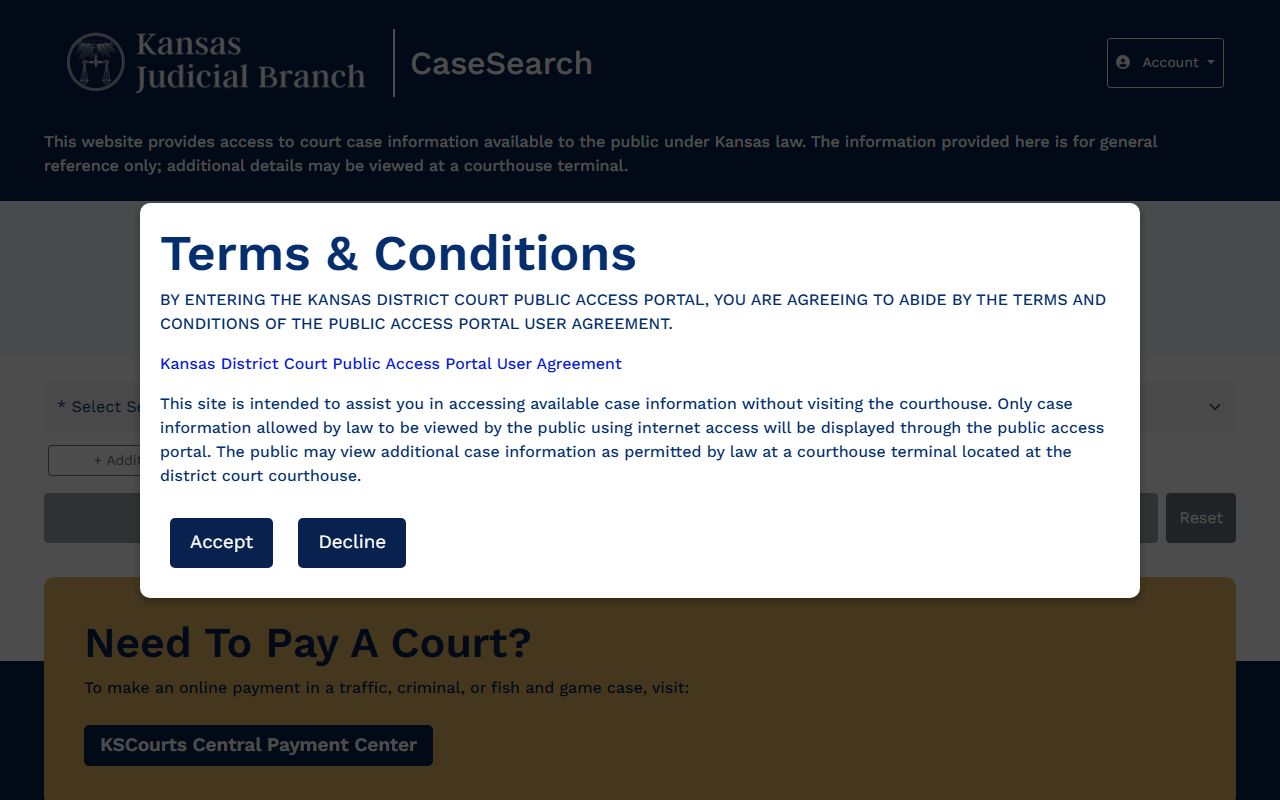
Use the portal result as an index and confirm certified copies through the court when exact wording matters.
Atchison Court Search Fields
Kansas Case Search has several paths. The best field depends on what is already known from the jail roster, bond paperwork, citation, or court notice. A case number is more precise than a name search, but many families begin with a name after seeing a booking on the Atchison County Jail roster.
| Field Label | Type | Required | Options / Format Notes |
|---|---|---|---|
| Case number / record number | Text | Yes if searching by number | Use the court case number when it appears on a notice, bond document, or court record. |
| Party/person name | Text | Yes if no case number | Use legal name and spelling. Try middle name or initial if results are crowded. |
| Business name | Text | Optional path | Used for entity parties rather than individual defendants. |
| Citation | Text | Optional path | Useful for traffic or citation-based matters when a citation number is available. |
| Role/criteria filters | Portal controls | Varies | Criteria may depend on the user's role and portal access. |
| User agreement | Acknowledgement | Required | The agreement must be accepted before the public search opens. |
If no case appears right away, check spelling, wait for filing, and call the court if timing is urgent. A weekend or holiday arrest may not produce a visible court filing at the same pace as the jail booking.
Atchison District Court Copies
The Atchison District Court is the local court contact for record and copy questions. Its page lists court phone 913-804-6060 and gives record-copy context. Published costs include $0.25 per copy, $1.00 per certification, and $12.00 per hour of research. Those figures matter when a person needs a certified charge, disposition, bond order, or docket copy rather than a screen view.
State court records requests also have a response timing rule. The Kansas Judicial Branch court records request page says a response is due by the end of the third business day after the request is received. A response does not always mean the full record is produced that day. The court may ask for clarification, collect fees, deny a closed record, or explain where the record must be requested.
The Atchison District Court page shows the local record-copy fee context.
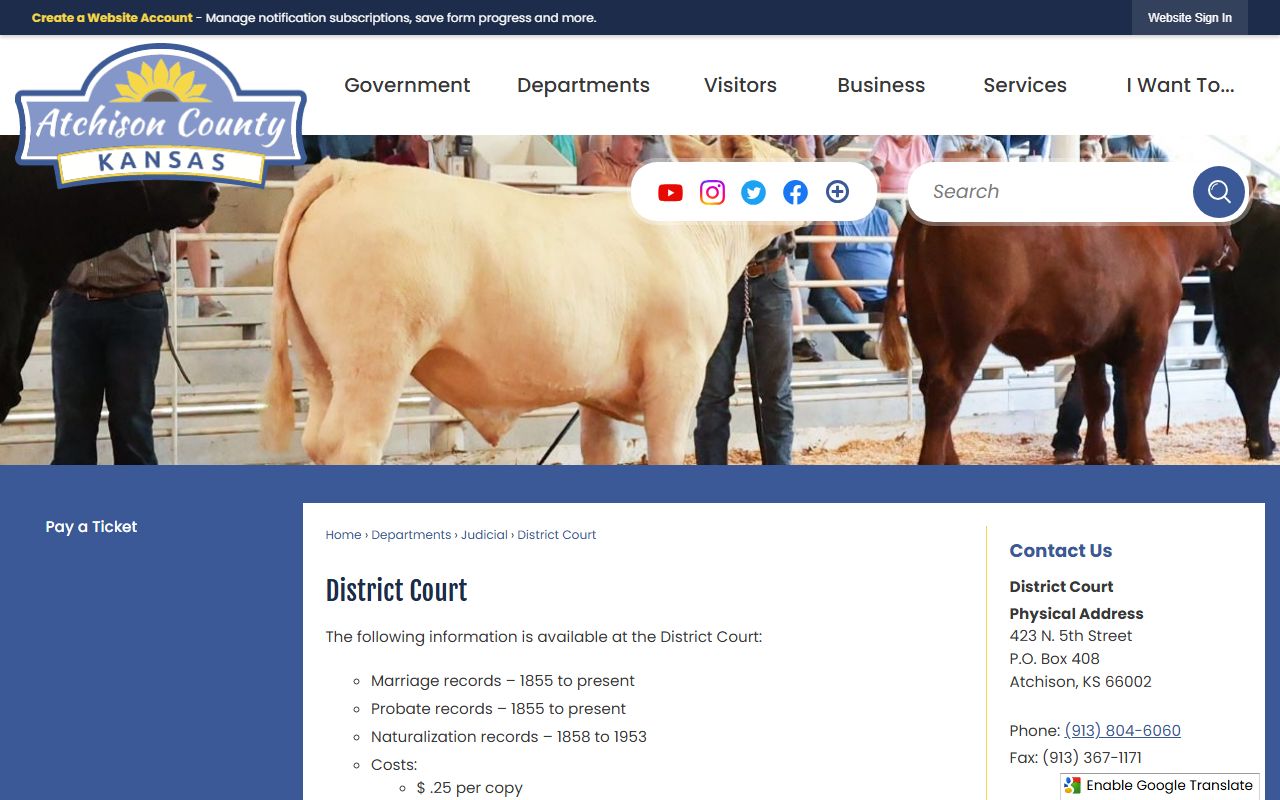
Use the local court for official copies when an online court record after an arrest is not enough.
Charges Filed After Arrest
A jail booking is usually the first public clue that someone was arrested, but the charge record begins in court when a charging document is filed. In Atchison County, that filed document is where the accusation becomes part of the court case. The exact document type depends on the charge path and stage of the criminal process.
A complaint often starts the case. An information is a formal prosecutor filing commonly used after a preliminary stage or waiver in felony matters. An indictment is a grand-jury charge. The Atchison County court record may also later show amended charges, dismissal orders, plea entries, sentencing orders, or bond modifications.
| Complaint | Information | Indictment | |
|---|---|---|---|
| Filed By | Prosecutor, often based on officer reports | Prosecutor | Grand jury |
| Common For | Initial criminal filing and many misdemeanor cases | Many felony cases after the early stage | Serious or grand-jury-presented felony matters |
| Starts | The court case or initial charge path | The formal felony charge path | The grand-jury charge path |
| Why It Matters | Shows what was first filed in court | May replace or refine earlier charge language | Shows charges returned by the grand jury |
Do not assume the roster wording and the charging document match. Booking text may be short, coded, or tied to a warrant. The court filing is the better source for the charge that the prosecutor chose to pursue.
Atchison Charge Status Records
Charge status changes as a case moves. A charge can stay pending, be amended to a different count, be reduced through plea negotiation, be dismissed, or be refiled under a new case number. A roster profile may warn that charges and bail can change after court appearances, so court records after a jail arrest should be checked again after first appearance and later settings.
| Status | What It Means | What To Check |
|---|---|---|
| Pending | The charge is open and has not reached final disposition. | Next court date, bond order, attorney entry, and conditions of release. |
| Amended / Reduced | The filed charge changed, often by order, plea, or prosecutor filing. | Compare the original complaint with the later information, plea, or amended count. |
| Dismissed | The court ended that charge without a conviction on that count. | Look for whether dismissal was with or without prejudice and whether other counts remain. |
| Refiled | A new case or count may replace an earlier filing. | Search by name and date range, not just the first case number. |
| Disposed | The charge has a final court outcome, such as plea, verdict, dismissal, or sentencing. | Read the journal entry, sentence, probation terms, or dismissal order. |
Disposition means outcome. It does not always mean conviction. Each count can have a different status, so read the charge list one count at a time.
Bond Orders After Arrest
Bond connects the jail record to the court record. The Atchison County roster may list a bond amount, but bond can change after a court appearance. The Sheriff's bond page says people who want to post cash bond or work with a bondsman should call the jail, tell staff when they will arrive, and identify the inmate. Bond is handled through the main entrance and control tower window. Cash bonds require the exact amount because staff cannot make change.
K.S.A. 22-2802 governs Kansas pretrial release. It allows a magistrate to set release terms meant to assure appearance and protect public safety. Conditions may include appearance bond, supervision, restrictions, cash deposit in lieu of bond, or own-recognizance release. If a person cannot meet release terms, the statute also addresses review without unnecessary delay.
| Bond Type | How It Works |
|---|---|
| Cash Bond | The full cash amount is posted. Atchison jail staff require exact cash when cash bond is accepted. |
| Surety Bond | A court-approved bondsman posts through a surety process. The Sheriff's page maintains the approved list. |
| PR / Own Recognizance | The person is released on a promise to appear, sometimes with added court conditions. |
| No-Bond Hold | No release amount is available, or another hold prevents release until a court or agency acts. |
Call the Atchison County Jail at 913-804-6080 before posting bond. The roster profile warning says bond amounts, charges, and case numbers may not be current after court appearances.
Warrants Behind Arrest Records
No separate official active Atchison County warrant search was located in the research. Warrant information appears indirectly when someone is booked into the Atchison County Jail. Roster examples showed arrest warrants, bench warrants, out-of-county warrants, parole violation language, and commitment orders. That is a custody record after booking, not a full active-warrant database.
For a warrant question tied to a court case, search Kansas Case Search by name and review the case docket for bench-warrant or failure-to-appear activity. For non-emergency custody or warrant questions, call the Sheriff's Office or jail at 913-804-6080, or dispatch at 913-367-4323. If the warrant or booking record is not online, use the Sheriff's open records form. Municipal warrants may remain in municipal court systems until the person is arrested or transferred to county custody.
- Arrest warrant
- A court order authorizing arrest on a charge or case.
- Bench warrant
- A warrant often issued after failure to appear or failure to obey a court order.
- Detainer
- A hold request from another agency or jurisdiction.
- Commit order
- A court order committing a person to jail custody.
Charges vs Convictions
An arrest and a charge are not the same as a conviction. A charge is an accusation filed or pursued in court. A conviction requires a guilty plea, no-contest plea accepted by the court, or verdict. Court records after a jail arrest may show both accusations and final outcomes, so the disposition line is critical.
| Charge | Conviction | |
|---|---|---|
| Stage | Accusation after arrest or prosecutor filing | Final outcome by plea or verdict |
| Proof Level | Based on probable cause and filed allegations | Requires proof beyond a reasonable doubt or an accepted plea |
| Where It Appears | Booking record, complaint, information, docket, or warrant entry | Disposition, judgment, sentencing order, or journal entry |
| What Can Change | May be amended, reduced, dismissed, or refiled | May later be appealed, corrected, or become eligible for expungement |
Sealed vs Expunged Records
Kansas uses expungement language for eligible arrest records. K.S.A. 22-2410 provides a process to petition for expungement of arrest records in eligible situations. If a record is expunged, public access may be limited by court order, but the exact effect depends on the order and Kansas law.
Sealed is a general access term meaning public visibility is restricted. Expunged is the Kansas statutory relief to review for arrest records under the cited statute. A person seeking relief should read the court order and statute closely or speak with a lawyer because eligibility, waiting periods, and exceptions can vary by case type and outcome.
| Sealed | Expunged | |
|---|---|---|
| Basic Meaning | Public access is restricted by rule or order. | Eligible arrest record is restricted through a Kansas expungement order. |
| Public Search Effect | The case or document may not appear in ordinary public access. | The arrest record may be treated as expunged for many public purposes. |
| Official Access | Courts or agencies may retain limited access when law allows. | Some official uses or exceptions may still apply under Kansas law. |
| Atchison Action | Ask the court what order controls access. | Review K.S.A. 22-2410 and file in the proper court if eligible. |
Kansas Records Access Rules
Kansas public access starts with the Kansas Open Records Act. Atchison County's KORA page cites K.S.A. 45-216 for the policy that public records are open unless otherwise provided by law. It also cites the response deadline in K.S.A. 45-218, fee authority in K.S.A. 45-219, request procedures in K.S.A. 45-220, exemptions in K.S.A. 45-221, and the commercial-use rule in K.S.A. 45-230.
KORA does not make every court or arrest-related record instantly available online. Fees may apply, advance payment can be required, identity or written request procedures may apply, and some records may be closed or partly redacted. Criminal investigation records, privacy categories, juvenile matters, sealed records, and some court-controlled files can have access limits.
The county KORA page explains open-records timing, fees, and limits.
Those same rules help frame requests for official copies when online court records after arrest do not answer the question.
Restricted Atchison Court Records
Some Atchison County court records after a jail arrest may not be visible in ordinary public search. Juvenile records, sealed cases, expunged arrest records, documents with protected personal information, and files tied to ongoing investigations may be limited. A dismissal also does not guarantee that every related record disappears from every system at the same time.
Mugshots and standard arrest reports have their own Kansas access caution. Kansas Attorney General guidance says mugshots or standard arrest reports are not required to be open to the public and may be discretionarily closed under K.S.A. 45-221(a). That is one reason a roster image, a booking record, and a court docket may show different pieces of the same event.
Criminal History Limits
Court records after a jail arrest are case records. They are not the same as an employment background check, tenant report, credit report, or full criminal-history search. Kansas Case Search may show district court case activity, while KBI criminal history search is the statewide criminal-history path. KDOC KASPER covers KDOC-operated or funded offender population information, not every arrest, charge, or court case in Kansas.
Important: This private site is not a consumer reporting agency and cannot be used for FCRA-covered screening decisions.
Atchison Arrest Case Walkthrough
Start with the booking if the person is in custody. The Atchison County Jail is at 518 Parallel Street and can be reached at 913-804-6080. Sheriff Jack Laurie oversees the Sheriff's Office, and the jail roster is the custody record source. Copy the booking number, arresting agency, booking date, listed charges, and bond amount. Then move to Kansas Case Search for the filed court case.
After the case is found, compare the booking charge to the complaint or information. Check whether the case has a bond order, next setting, warrant entry, dismissal, amended count, plea, sentence, or probation term. If the result is unclear, call Atchison District Court at 913-804-6060 for records and copy questions. For certified copies, expect the published court copy, certification, and research fees to control unless the court gives updated instructions.
Note: A roster entry shows custody status; a court record shows the filed case and later court action.